 English


Exercise devices for the treatment and prevention of shoulder disorders
The DAVID Shoulder Solution uses joint-specific movements and visual feedback on the EVE Terminal to guide controlled shoulder exercise.
Since 1981, DAVID has developed and manufactured exercise equipment for healthcare settings. Clinics and hospitals in 49 countries use the DAVID Exercise Therapy Solution.
7 reasons why you should use a Medical Shoulder Device
Shoulder pain is common
Shoulder problems cause the most sick leaves
of any musculoskeletal illnesses (15 days on average).
Shoulder pain is the most common musculoskeletal
disorder in people over 65 years old (Taylor, 2005) and
its prevalence has tripled in the course of 40 years (Harkness,
2005). Every second person will suffer from shoulder pain
during their lifetime.
Data-driven, device-based exercise therapy
Physiotherapy for shoulder problems often uses simple tools such as pulleys and elastic bands. These are useful, but the load and range of motion are difficult to measure and reproduce precisely.
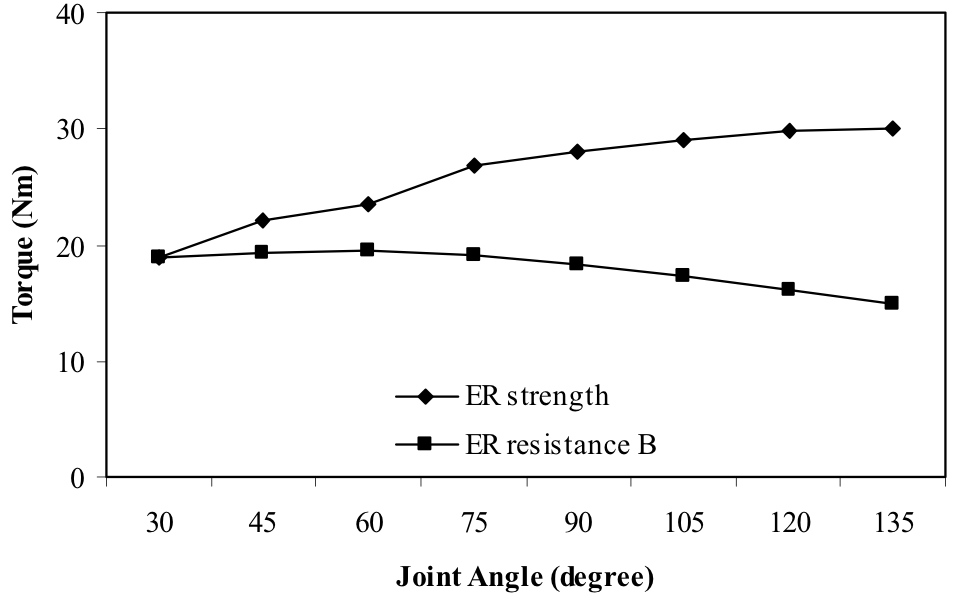
With elastic bands for internal and external rotation, resistance increases towards the end of the movement, while the strength of the rotator muscles is lower in that position (Hannah 2002). This can increase the load on the joint where the muscles are weakest.
DAVID shoulder devices use resistance curves designed to follow the strength curves of the muscles, to support controlled exercise.
Shoulder complaints are often associated with weakness of the rotator cuff and scapular stabilisers. The DAVID shoulder devices are designed to isolate the internal and external rotators and the scapular stabilisers so that these muscles can be exercised in a targeted way.
With DAVID, physiotherapists can deliver measurable, trackable and repeatable exercise programmes and follow each patient’s progress.
A shift towards exercise therapy
Today, more evidence is emerging which continuously prefers exercise therapy to surgery. Although there are shoulder conditions that require surgical actions, the most common problems, such as shoulder impingement (or sub acromial pain syndrome), have no scientific justification for surgical treatment.
Shoulder impingement syndrome is one of the most typical shoulder problems. Surgery is a common treatment for this problem but recent study has shown that it offers no benefit over active treatment: “… arthroscopic acromioplasty has no good justification as a treatment for shoulder impingement syndrome, and it should therefore be abandoned as the standard treatment. Structured exercise treatment should instead be the basis for treatment” (Ketola, 2016).
Isolation of the target muscles
With the DAVID Shoulder Solution, the internal and external rotators of the shoulder and the scapular stabilisers can be activated in a controlled way. Joint angles and a supportive movement arm are designed to focus the activation on the target muscles.
Isolation helps to prevent stronger internal rotators, such as the pectoralis major, from taking over the movement. When exercising painful shoulders, a carefully designed resistance curve helps to perform the exercise in a controlled way.
If exercise is medicine, why don’t we know the dose?
Exercise interventions are poorly reported across a range of health conditions. If exercise is medicine, then how it is prescribed and delivered is unclear, potentially limiting its translation from research to practice.1
With the DAVID Shoulder Concept, training progress is recorded and presented in a report for the treating professional.
1. Hansford HJ, Wewege MA, Cashin AG, Hagstrom AD, Clifford BK, McAuley JH, Jones MD. If exercise is medicine, why don’t we know the dose? An overview of systematic reviews assessing reporting quality of exercise interventions in health and disease. Br J Sports Med 2022;56(12):692-700.
Guiding and motivation
On each EVE-equipped device, the terminal guides patients to follow the parameters of their individual programme, such as movements, settings, load, range of motion, repetitions, movement speed, progression, number and frequency of sessions. EVE can suggest these parameters; the treating professional sets and adjusts them. Patients receive feedback on how closely they followed the parameters.
EVE exercise therapy software
EVE is a software platform for healthcare professionals that brings exercise programmes, patient data and clinic administration together. It is used to set up training templates, record and report outcome measures and collect patient feedback. Programme progression suggestions are based on recorded training data and patient feedback; the treating professional reviews and approves each programme. EVE is designed to reduce administrative work so that therapists can spend more time with their patients. EVE is available in more than 20 languages.
- Intake Automation – Email and text intake forms and functional outcomes to patients
- Measuring function – mobility and isometric test functionalities
- Therapy Software – Easily document treatments via daily notes
- Training Programs – Automation of training programs through AI
- Home Exercise – home exercise programs
- Medical Questionnaires – Digitization of medical questionnaires
- Schedule Appointments – via APP and embedded calendars
- Hl7/API Integration – Connect EVE with your existing EMR system or other software/hardware vendors
The EVE mobile app for patients
The EVE app is a mobile app for tracking training data and sharing exercise programmes.
- Guidance and tracking for home exercises
- Chat with your therapist or group members
- Manage appointments with your therapist or training group
- Task module with notifications to improve your health
- Overview of training results and reports
A business model for data-driven, device-based exercise therapy
How can your centre stand out and make an investment in exercise therapy viable? Learn how physiotherapy and chiropractic practices, hospitals, rehabilitation centres, gyms and senior care centres build a business model around DAVID.
DAVID in practice
Since 1981, DAVID has developed exercise equipment for physiotherapy practices, hospitals, chiropractic practices, rehabilitation centres, senior care centres, gyms and military organisations. Clinics and hospitals in 49 countries use the DAVID Exercise Therapy Solution.
DAVID devices are manufactured in Finland. Published validation and outcome studies with DAVID devices, with full references, are listed on our Scientific evidence page.
Typical areas of use
The DAVID shoulder devices are intended for strengthening exercise in the treatment or prevention of shoulder disorders. After professional assessment, they can be used in exercise programmes for subacute, chronic, recurrent, post-operative or post-traumatic shoulder problems, such as rotator cuff disorders, frozen shoulder, shoulder instability, acromioclavicular joint disorders and shoulder osteoarthritis, within the limits of the instructions for use. See the instructions for use for contraindications and precautions.
Exercise therapy devices for the shoulder
G660 Glenohumeral External Rotation Device
G640 Glenohumeral Internal Rotation Device
G510 Chest Press
G420 Pulldown
G460 Shoulder Abduction
Generation Line medical devices (except G250): Class Im, CE 0598, MDD 93/42/EEC. The G250 Elliptic Leg Press is a training device and not a medical device. Use DAVID medical devices only as described in the instructions for use. See the instructions for use for intended purpose, contraindications and precautions. Exercise may cause temporary muscle soreness.